Printable Comic Strip and Storyboard Templates
Which comic strip template do I need?
Count the panels the story needs, then pick the shape. A strip is three or four panels in a row, setup, build, punchline, and it reads across one landscape page. A grid of six or nine equal panels is the sheet a class fills in, and it holds the most drawing per page. The comic-book page is the one with unequal rows: a wide establishing panel across the top, two beneath it, three along the bottom, which is how a printed comic actually looks.
-
6 panels
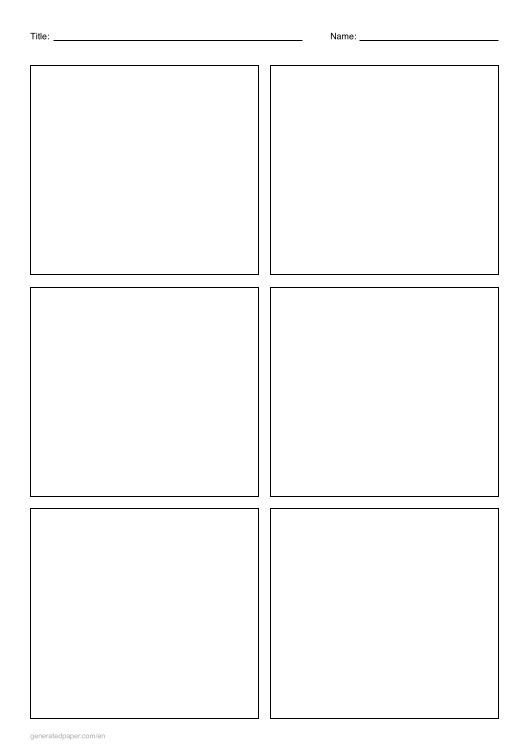
two columns of three equal panels, title line at the top
-
3 strips of 3
the newspaper shape: three strips down the page, a wider gap between them
-
4-panel strip
one strip of four across a landscape page
-
Comic book page
one wide panel, then two, then three
How do I turn it into a storyboard?
A storyboard is the same sheet with two settings changed. The frames keep a fixed shape, 16:9 for anything filmed on a phone or shown on a screen, 4:3 for older video and slides, and each frame gets writing lines beneath it for the shot, the action and the dialogue. The frames are numbered so a shot list can refer to them. Six frames a page is the usual sheet. Storyboard template with 6 frames.
Four frames a page gives each shot twice the room, which is what a drawn storyboard for a short film or an animation needs. 16:9 storyboard with 4 large frames.
Can the panels have lines under them for writing?
Yes, two or three lines under each panel. That is the picture-story worksheet primary schools use, draw the scene and write the sentence under it, and the same sheet serves a captioned comic, a sequencing exercise or a visual recipe. Four panels with three lines each is the usual classroom sheet, and it works just as well with six. Four panels with three writing lines each.
Is there a 4-koma (four-panel manga) layout?
The column layout stacks four panels top to bottom, which is the 4-koma shape. Eight panels puts two columns side by side, which is how a 4-koma page is drawn and read, right column first. The panels come out a little wider than tall, as the printed ones are. 4-koma page with two columns.